
First signs
What hindsight reveals

They say that hindsight is 20/20. Certainly, looking back on our lives with the benefit of newly acquired information can bring clarity and understanding to all of us regarding situations once deeply misunderstood. But 20/20 vision only goes so far; when looking at an eye chart, a person with 20/20 vision sees only what an average person can see standing 20 feet away. Even so, it would be hard to find a more apt metaphor for the dementia journey.
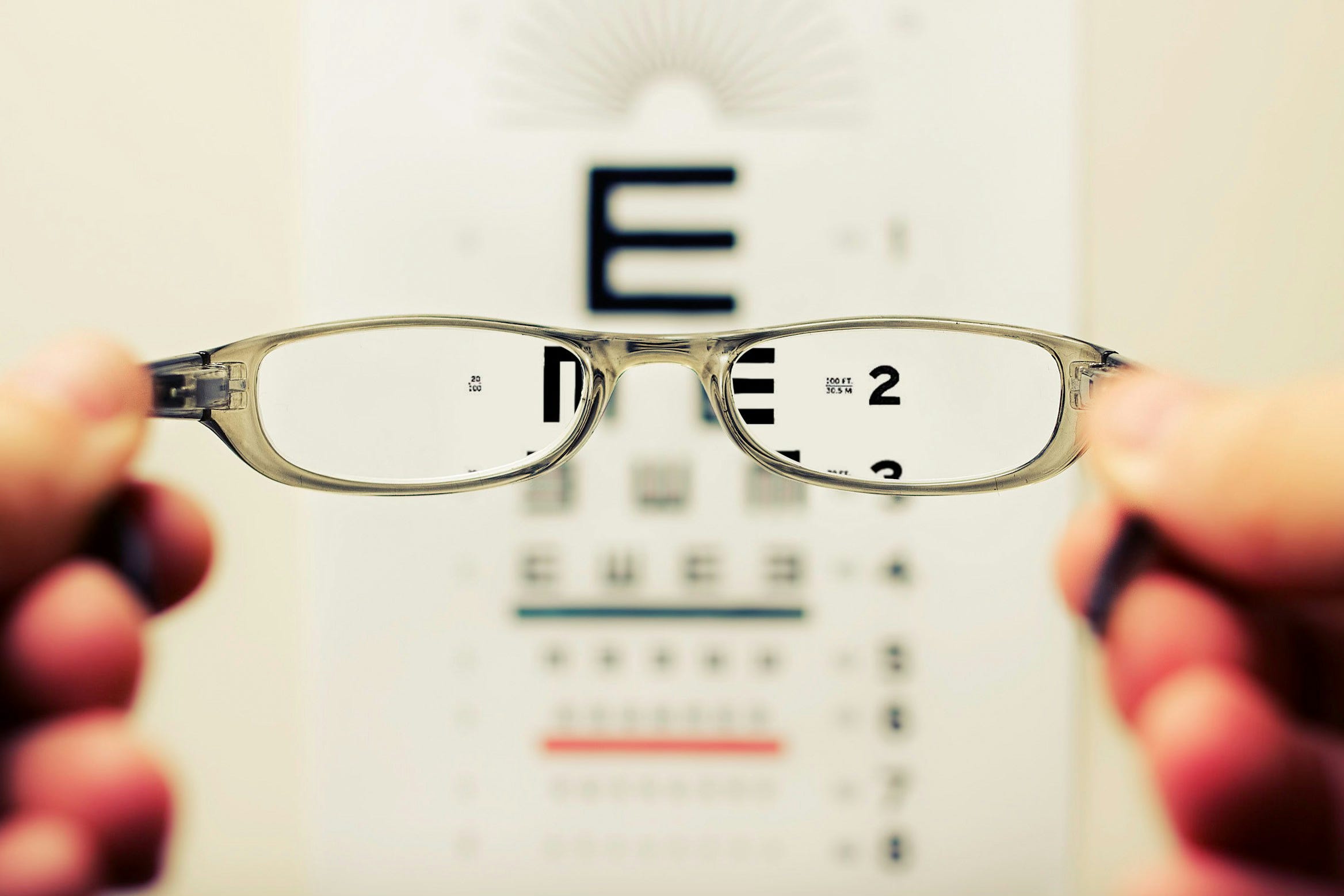
Photo by David Travis on Unsplash
When I look back on the last several years of our lives, to discern when and how my husband’s problems started, some things seem so obvious now. But one thing is particularly clear: if you think—as I once did—that dementia is just about losing your memory, you may miss the early signs of disease in a loved one. I know because I did.
Today, I finally see what confused, frustrated, and upset me for so long: it was the disease. But there are also questions. Some things remain murky. Where did Doug end and the disease begin?
One definitive marker occurred in 2019—long before corticobasal syndrome (CBS) and frontotemporal degeneration (FTD) attacked Doug’s self-awareness, making him mostly oblivious to his decline. It was then that he first grew concerned enough about the problems he was having to mention them to our family doctor. The most obvious way those problems manifested back then was his loss of words. Our doctor—who was as unaware of the symptoms and trajectory of rare dementias as we were—told him not to worry. “It’s not Alzheimer’s,” she reassured him. “You’re just retired. All my older, retired patients find they’re not as sharp as they used to be.”
I clung to those reassurances like a toddler to a favourite blanket. “It’s not Alzheimer’s,” I would tell him whenever he expressed concern. “The doctor said so.”
“It’s not Alzheimer’s,” I would tell myself whenever I felt unease. Within a couple of years, that phrase became a mantra. The thing is, it was something. Something else. Something even more sinister.
During the pandemic, we took long daily walks. Like so many others during the COVID crisis, I shut myself away in my office and worked too many hours at my computer and in online meetings. Those walks helped purge the stress of the day and allowed us to catch up with one another.
Except—I remember feeling our conversations lacked the depth and meaning they once held. My husband had always been a huge fan of world and military history and often told me about parallels in current events. However, during those pandemic walks, our conversations largely centered on Doug commenting on things he saw around him. I remember thinking our talks—amid the largest global event of our lifetimes—had become mundane, even boring. If I asked for his opinion on something, he would turn the question back to me, “What do you think?”
He had always been a thoughtful and caring man, chivalrous toward me, courteous and generous toward everyone he met. But he began expressing opinions and attitudes that shocked me and that seemed foreign to the man I’d loved long and knew so well. If we passed someone on the street, he would make uncharacteristically critical comments about their appearance. He took to spitting constantly, hawking up saliva, expectorating it on the ground. And when I pleaded with him to stop, he would say, “I have to. What am I supposed to do, swallow it?” Some days, I refused to walk beside him. Is this what our senior years were destined to be?
His critical thinking seemed dulled. He lost words—even common words—constantly, and constantly, I filled in his blanks.
“Wow! Look at all those …” he would start before trailing off.
“Trees?”
“Yes, trees!”
Or, “So many cars … what do you call it when there are so many cars?” he would ask.
“Rush hour?”
“Yes, rush hour!”
I finished his sentences and filled in his blanks easily, out of habit—until the day it occurred to me that maybe I was enabling him.
I berated him
“Stop expecting me to feed you the words!” I remember berating him. “I’m not going to do it anymore. You have to challenge your brain! Reach for the word. If you can’t think of it, find another way to tell me what you’re trying to say.”
I also lectured him repeatedly. “Don’t let yourself get mentally lazy. You have to work at keeping your brain fit!”
There were other early warning signs. I had always managed the household budget, while Doug looked after our long-term finances. But our retirement planner began telling us, again and again, that we needed to diversify our investments. My brother-in-law, an accountant, gently but repeatedly suggested I become more aware of what Doug was doing with our retirement funds because he thought my husband was taking big, unnecessary risks.
But life was busy. Doug had his areas of “expertise” and I had mine. I’d always trusted him completely with such things, and besides, I had zero understanding of investing and even less interest in learning about it.
Eventually, though, the warnings got through. I figured I’d better start learning some investing fundamentals—at least enough to know whether we needed to make some adjustments. It took me a couple of years to recognize that we did. I will forever be grateful that we were able to implement the needed changes before we found ourselves facing financial catastrophe. Not everyone is so lucky.
I didn’t like who my husband was becoming
In the midst of it all, I remember feeling frustrated and confused, hurt at times, angry at others. I didn’t like who my husband was becoming. Was this all somehow related to the pandemic? Was it some weird, late-life crisis? Why was he making these choices? Didn’t he care about his life? Didn’t he care about me?
Here is what I know now: I didn’t know then what I didn’t know. I didn’t recognize the signs and symptoms of a rare brain disease—the failing language, the personality changes, the apathy, the loss of empathy, the disinhibition, the risky behaviours. His memory seemed fine. I didn’t know enough to put the rest together.
Eventually, it was our children who delivered the wake-up call that forced me to get my head out from under the blanket. They took me aside and said they thought there was something serious going on with their dad; I should get him into a doctor to get thoroughly checked. So began the year-long process I’ve documented here.
These are hard memories to relive, and harder to share.
But, as theologian and author Walter Brueggemann has observed, “When pain is brought to speech, it turns to energy. If it is not brought to speech, it turns to despair.”
Sharing these truths is my way of bringing those years of confusion, frustration, and hurt to speech. I hope that doing so might also bring understanding and awareness; this is a terrible disease, but it is a disease. There is no cause for shame or judgment, only compassion.
Perhaps in bringing our pain to speech, someone else might see the circumstances of their life more clearly. Possibly they will be motivated to investigate concerns. Maybe they will realize they are not alone.
Oh Patricia, so well written, so heartbreaking. Thank you for sharing the journey.
Losing someone you love while they are still physically present has got to be one of the most heartbreaking, challenging and confusing things to face and try to figure out. Oh, Patricia, thank you for sharing so honestly, vulnerably, and bravely. God be with you as you walk this painful trail of tears.